In Nigeria today, one reality is clear — there are far more job seekers than available jobs. Every year, thousands of graduates enter the labour market, but only a fraction secure stable and well-paying employment.
In this kind of environment, your choice of course of study can significantly affect your long-term career opportunities.
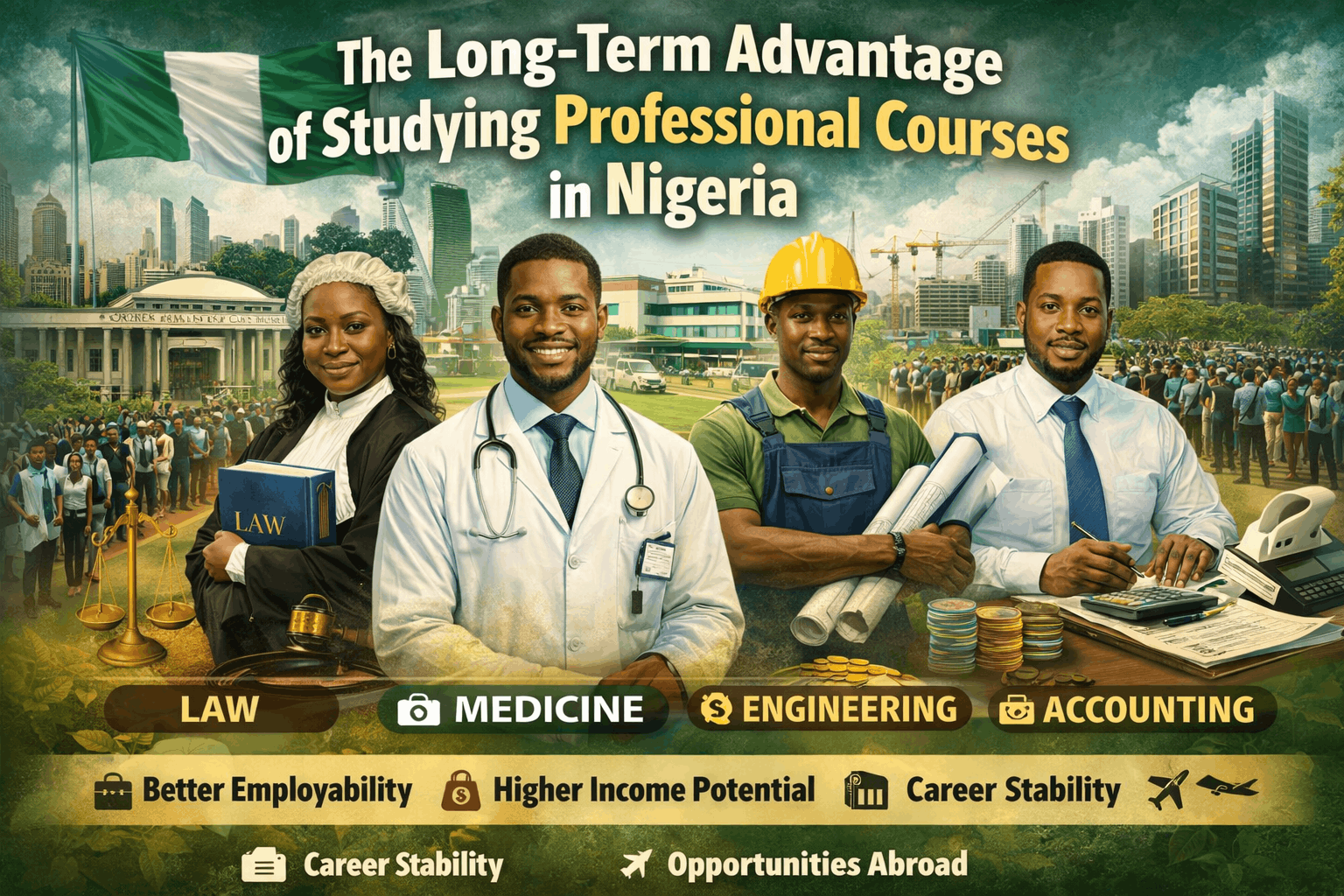
Studying a professional course such as Law, Medicine, Engineering, Accounting, or other regulated disciplines puts you in a stronger position compared to many other fields.
This is not just a Nigerian issue — it applies to many developing or third-world countries where job opportunities are limited and competition is high.
In this article, we will explore why professional courses offer a long-term advantage and how they can shape your career trajectory.
📊 1. The Reality of the Job Market in Nigeria
Nigeria’s job market is highly competitive.
Thousands of graduates are produced yearly, but the number of available jobs does not match this output.
This creates a situation where:
- Many graduates remain unemployed or underemployed
- Some accept jobs outside their field
- Others struggle for years to secure stable employment
In such an environment, having a degree alone is no longer enough — what you study matters.
🎓 2. What Makes a Course “Professional”?
Professional courses are fields that require specialized training, certification, and often licensing before you can practice.
Examples include:
- Law
- Medicine and Surgery
- Engineering
- Accounting
- Pharmacy
These courses are structured to prepare you directly for specific careers.
Unlike general degrees, they often have clear career paths and recognized professional bodies.
💼 3. Higher Employability Compared to General Degrees
One major advantage of professional courses is employability.
Employers tend to prefer candidates who have:
- Specific technical skills
- Industry-relevant knowledge
- Recognized certifications
For example:
- An engineer can work in construction, oil and gas, or manufacturing
- A doctor can work in hospitals, clinics, or private practice
- A lawyer can work in law firms, companies, or independently
This flexibility increases your chances of getting a job.
📈 4. Strong Long-Term Career Stability
Professional careers often offer long-term stability.
Once you are established in fields like Medicine, Law, or Engineering, your skills remain relevant for many years.
Unlike some fields where demand fluctuates, professional roles tend to have consistent demand.
This stability is important in a country where economic conditions can be unpredictable.
🌍 5. Global Opportunities
Another key advantage is international mobility.
Professional courses are often recognized globally.
For example:
- Doctors can work in multiple countries with additional certification
- Engineers can apply their skills globally
- Accountants can pursue international certifications
This gives you opportunities beyond Nigeria.
💰 6. Better Income Potential
While income may not be high at the beginning, professional careers tend to offer strong earning potential over time.
With experience and specialization, professionals can:
- Earn higher salaries
- Start private practice or consultancy
- Work with international organizations
This long-term financial growth is a major advantage.
⚙️ 7. Ability to Work Independently
One unique benefit of professional courses is the ability to work independently.
For example:
- Lawyers can start their own practice
- Doctors can open clinics
- Engineers can run consulting firms
This reduces dependence on traditional employment.
In a country with limited job openings, this is a powerful advantage.
🎯 8. Competitive Advantage in a Crowded Market
When thousands of graduates are competing for the same roles, having a professional qualification sets you apart.
It signals:
- Specialization
- Commitment
- Technical competence
This makes employers more confident in your ability to deliver value.
🧠 9. It Still Requires Strategy
While professional courses offer advantages, success is not automatic.
You still need to:
- Build practical skills
- Gain experience through internships
- Continue learning and improving
Understanding your entry path is important: Internship vs Graduate Trainee.
You can also improve your application success here: Tips for Applying for Graduate Programme.
🔁 10. Handling Challenges Along the Way
Even with a professional degree, you may face challenges during your job search.
If you experience repeated rejections: How to Handle Job Rejections.
The key is to keep improving your approach.
💡 Final Thoughts
In a country like Nigeria, where job opportunities are limited and competition is high, studying a professional course can give you a strong long-term advantage.
It provides structure, relevance, and flexibility in your career.
However, it is not just about the course you study — it is also about how you position yourself.
Build skills, gain experience, and apply strategically.
With the right approach, a professional course can open doors to stability, growth, and long-term success.
If this plug helps you get the job, share it with others — I wish you luck! 🍀
WorkLink Nigeria — your trusted source for verified job updates.